Phonics

  • Explicit Phonics Instruction: What Teacher-Led Modeling Actually Looks Like

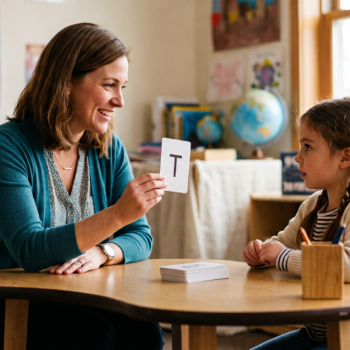
    An adult points to a letter-sound flashcard during explicit phonics instruction as a young child matches the letter tile.

    Explicit phonics instruction is a delivery method: the teacher states the sound-spelling connection directly and models how to use it, rather than expecting students to infer it from exposure, context, or repeated guessing. It matters because the alphabetic code is not something the brain discovers on its own, and a child left to figure it out alone is a child quietly being set up to fall behind.

    Read More

  • Phonological Awareness vs Phonics: Why One Comes First

    A teacher leans in to talk with a young student at a small table in a cozy reading corner

    Phonological awareness is the ability to hear and work with the sounds in spoken language, syllables, rhymes, and individual phonemes, with no print involved. Phonics connects those sounds to letters. The difference matters because phonological awareness has to develop first: a student can’t map sounds to letters she can’t yet hear in the first place.

    Read More

  • Phonics Scope and Sequence: Why the Order You Teach In Matters

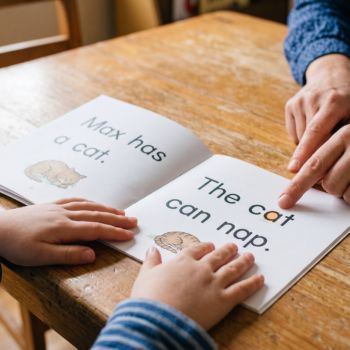
    A teacher points to words in a decodable reader showing the sentences "Max has a cat" and "The cat can nap" while a young child follows along with both hands on the page.

    A phonics scope and sequence is the planned order in which letter-sound patterns are taught, moving from simple to complex, with each new skill building on the ones before it. It matters because reading is cumulative: a student who misses a rung in the progression stalls at exactly that point, no matter how solid the rungs below it are.

    Read More

  • Phonics Rules: Which Patterns Are Actually Reliable (and Which Aren’t)

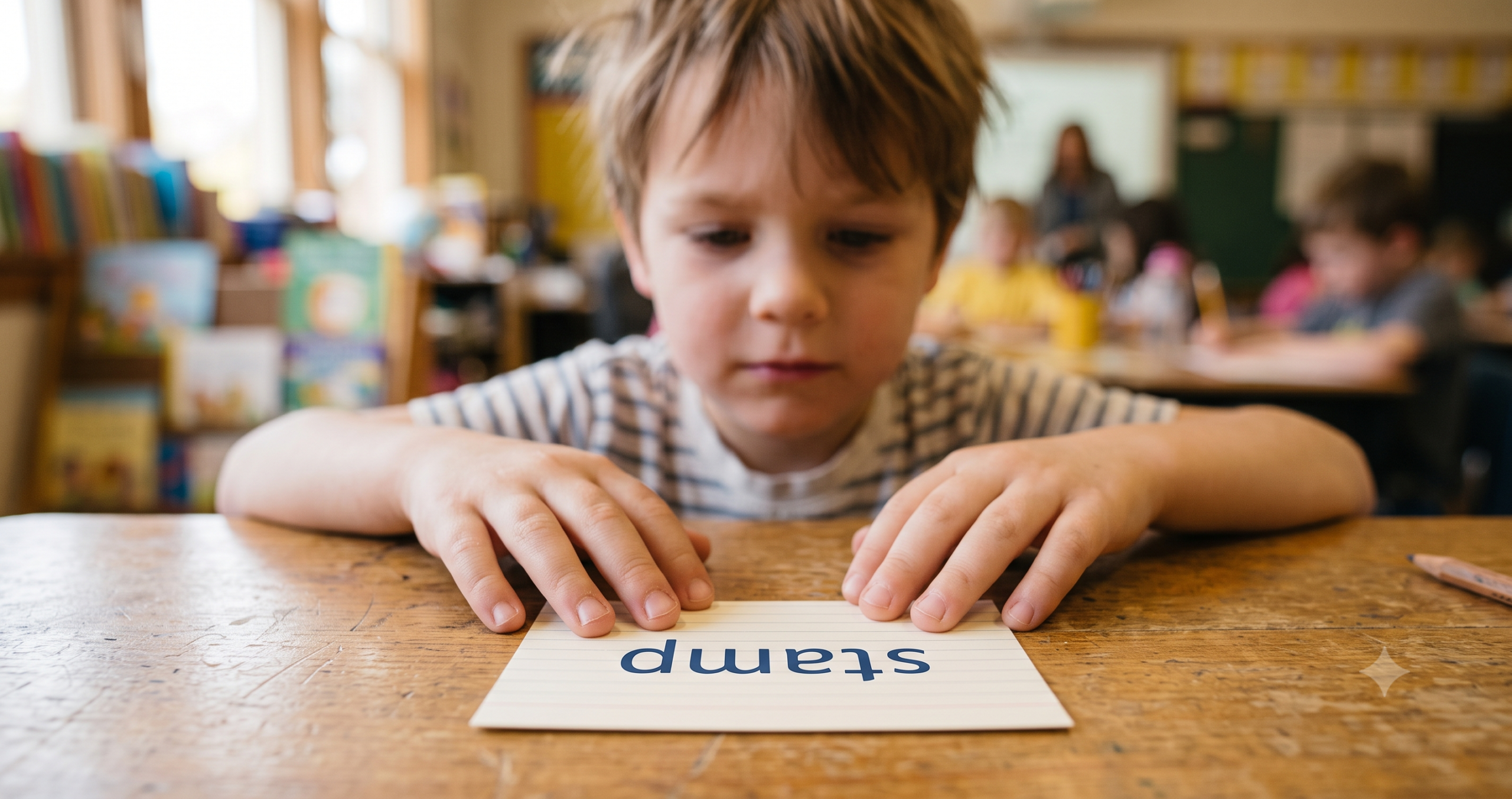
    A young boy tracks text with his finger as he reads a decodable reader at his classroom desk, with a colorful word wall and well-stocked book shelves visible behind him.

    Phonics rules are the reliable patterns that connect letters and letter combinations to the sounds they represent: digraphs, vowel teams, silent-e, r-controlled vowels, and the syllable types that organize them. They matter because these patterns are what let a reader decode a word she has never seen before, instead of sounding it out letter by letter and landing on a non-word the way Henry did with rain.

    Read More

  • Synthetic Phonics: What It Actually Is and Why It Matters for Your Students

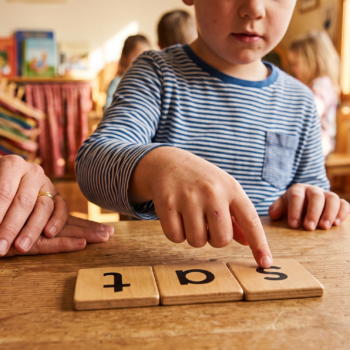
    A young child points to wooden letter tiles spelling "sat" on a table during a synthetic phonics lesson, with a teacher seated alongside providing support.

    Synthetic phonics is a method of teaching reading that starts with individual sounds and the letters that represent them, taught one at a time in a planned order, and then has students blend those sounds together to read whole words. It matters because this part-to-whole sequence is the approach most consistently supported by reading research for beginning and struggling readers. It doesn’t assume students already hear the sounds inside words. It builds that skill first.

    Read More

  • He Knows Letters. So Why Can’t He Read?

    He Knows Letters. So Why Can't He Read?

    If you have a student who knows letters but can’t seem to read unfamiliar words, you already know the particular confusion of watching a child do everything right and still not get there. He’s not struggling with effort. He’s not disengaged. He knows his letters. So what’s happening?

    Read More