L is for Literacy

The Science of Reading Simplified

Do you know The Silent Signs of Reading Struggles? Get the Guide!

L is for Literacy
  • Home
  • Read Aloud Recs
  • Blog
  • About
  • Contact
  • Science of Reading

    Phonemic Awareness Assessment: How to Read the Results and Know What to Do Next
    • June 30, 2026
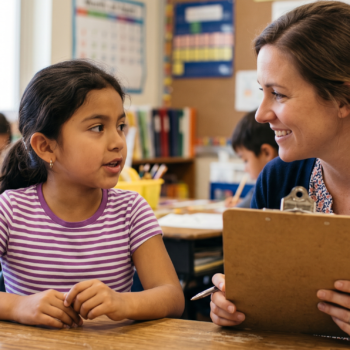
    A teacher sits beside a young elementary student at a classroom desk, smiling warmly as the child speaks. The teacher holds a clipboard and pen, suggesting an informal phonemic awareness assessment in progress. Other students work independently in the background.

    A phonemic awareness assessment is a short oral screening that measures whether a child can hear, isolate, blend, segment, and manipulate individual sounds in spoken words, with no print and no pictures involved, and it matters because that sound-level skill is the foundation decoding is built on. A low score doesn’t just flag a struggling reader. It points to a specific, teachable gap underneath the reading.
    Read More

  • Science of Reading

    Phonemic Awareness Activities: What Actually Makes Them Work

    • June 29, 2026
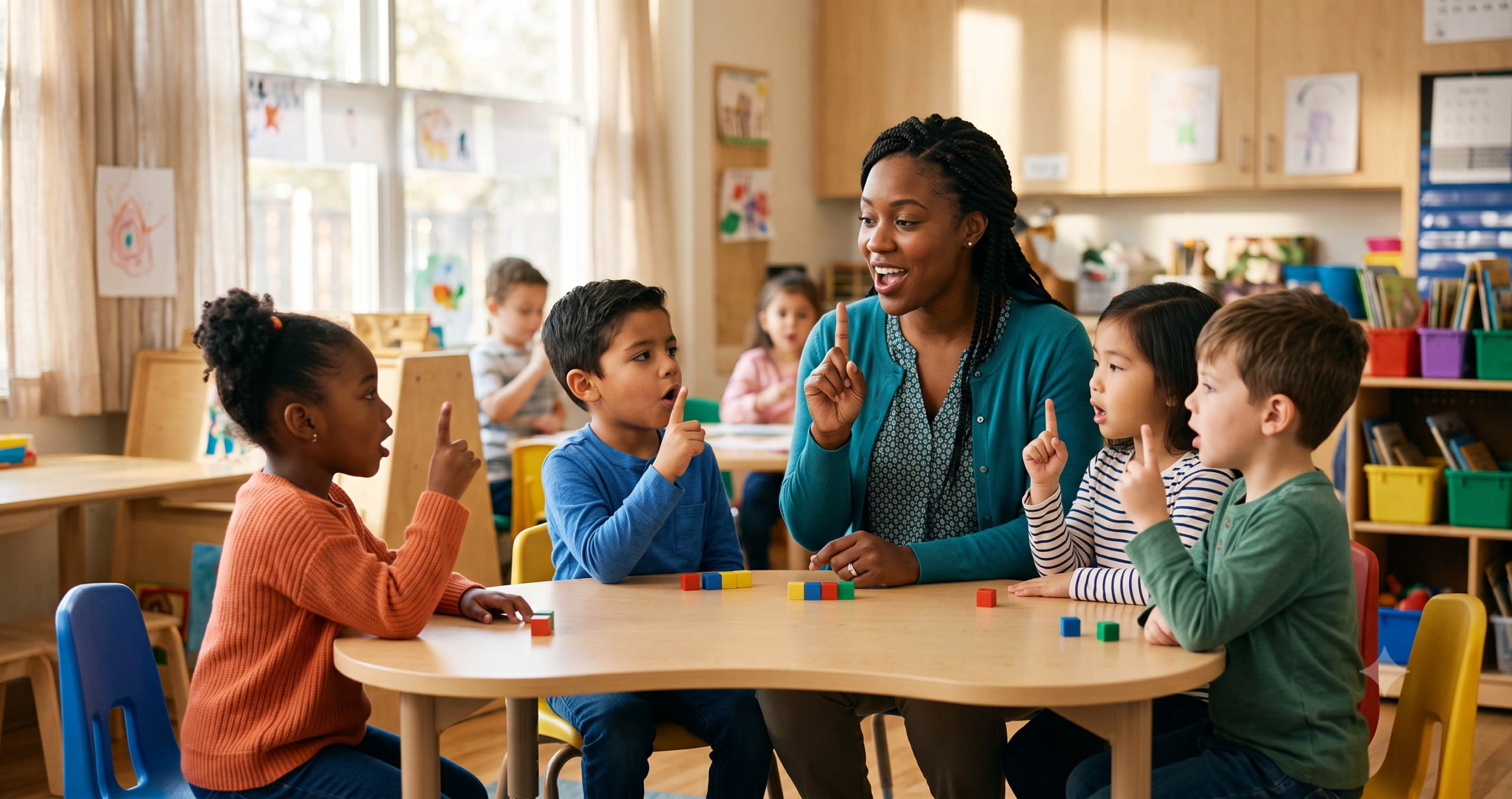
    A teacher leads a small group of young students in a phonemic awareness activity, with all four children holding up one finger to segment the first sound in a word while colorful manipulative blocks sit on the table in front of them.

    Phonemic awareness activities are structured practice in hearing, identifying, and manipulating the individual sounds in spoken words, and the most effective ones coordinate with the letter-sound connections students are learning. Done well, they build the auditory foundation a child needs before decoding can happen at all.

    Read More

  • Science of Reading

    What Is Phonemic Awareness? The Skill Most Teachers Were Never Trained to Teach

    • June 28, 2026
    A teacher sits across from a young student at a classroom table with a reading guide open between them, demonstrating phonemic awareness instruction in a one-on-one setting.

    Phonemic awareness is the ability to hear, identify, and manipulate the individual sounds (phonemes) in spoken words. It is entirely oral. No letters, no print, no books. And it is one of the strongest predictors of whether a child will learn to read successfully, because it is the skill that lets her connect the sounds she hears to the letters she sees. Without it, phonics instruction has nothing to hook onto.

    Read More

  • Science of Reading

    The Phonological Awareness Continuum: What Comes Before What, and Why It Matters

    • May 7, 2026
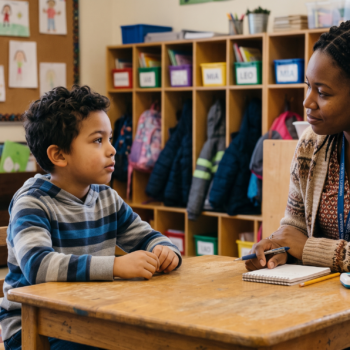
    A teacher with a notepad and pen sits across from a young boy at a small table, listening attentively as he responds during a one-on-one phonological awareness assessment.

    The phonological awareness continuum is the developmental sequence sound skills move through, from the largest units of spoken language down to the smallest: words, syllables, onset-rime, and phonemes. Knowing where a student is on the continuum is what tells teachers exactly which sound-level skill to teach next, instead of running the same activities for every student and hoping something lands.

    Read More

  • Science of Reading

    Phonemic Awareness vs Phonics: The Distinction Most Teachers Were Never Taught

    • May 4, 2026
    A young student practices writing words in a notebook at a classroom desk, demonstrating the connection between phonemic awareness and phonics.

    Phonemic awareness is the ability to hear and manipulate the individual sounds in spoken words. Phonics is the ability to connect those sounds to printed letters. The distinction matters because when phonics instruction isn’t working for a student, the problem is often upstream: the sound awareness that phonics depends on hasn’t been built yet.

    Read More

  • Science of Reading

    Teaching Phonics Without Losing the Love of Reading

    • April 20, 2026
    Teaching phonics without losing the love of reading

    If you have been holding the question of teaching phonics at a distance because you are afraid the answer is that you have to choose — between rigor and joy, between the science and the classroom you have built — Carol’s story is the clearest answer I know to that fear.

    Read More

  • Struggling Readers

    He Knows Letters. So Why Can’t He Read?

    • April 13, 2026
    He Knows Letters. So Why Can't He Read?

    If you have a student who knows letters but can’t seem to read unfamiliar words, you already know the particular confusion of watching a child do everything right and still not get there. He’s not struggling with effort. He’s not disengaged. He knows his letters. So what’s happening?

    Read More

  • Science of Reading

    Language Comprehension vs Reading Comprehension: Why They’re Not the Same Thing

    • April 10, 2026
    Language Comprehension vs Reading Comprehension

    She reads every word correctly. Her fluency is solid — maybe even above benchmark. She doesn’t stumble, doesn’t hesitate, doesn’t ask for help. And then you ask her to tell you what the passage was about, and she stares at you like you’ve asked her to explain it in a language she doesn’t speak. Sound familiar?

    Read More

  • Science of Reading

    Word Recognition and Language Comprehension: The Two Sides of Reading

    • April 9, 2026
    Word recognition and language comprehension

    Word recognition and language comprehension are the two components that produce reading comprehension. Word recognition is the ability to accurately and efficiently identify printed words — connecting letters to sounds and eventually recognizing words automatically. Language comprehension is the ability to understand spoken language — vocabulary, grammar, background knowledge, and the ability to make inferences.

    Read More

  • Science of Reading

    What Is Listening Comprehension — And Why It Matters More Than Most Teachers Realize

    • April 8, 2026
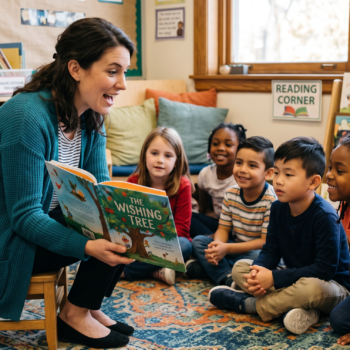
    A teacher reads aloud from a picture book called The Wishing Tree to a group of delighted elementary students sitting on a rug in a cozy classroom reading corner, with labeled bookshelves and picture books surrounding them.

    Listening comprehension is the ability to make meaning from spoken language: taking in vocabulary, processing sentence structure, connecting ideas to what you already know, and drawing inferences beyond what’s stated. It matters because it becomes the strongest predictor of reading comprehension by the intermediate grades, which means a student can decode every word and still miss what the text means.

    Read More

Posts pagination

Previous 1 … 3 4 5 6 7 8 9 10 11 12 13 14 Next
Hello!
Hello!

MY MISSION IS SIMPLE: I'm Shannon and I give teachers the science-backed tools they need to help every student become a confident reader. I'm so glad you're here! 

 
5 Silent Signs Sidebar
Woohoo! You're on the List!

We're in this together!

L is for Literacy emerged from my own struggles and successes as a reading interventionist. I understand the challenges and joys of teaching reading because I’ve experienced them firsthand. Consider this a safe space where you’ll find reliable, practical resources from someone who truly values the important work you do.

Let's Connect!
Get the Guide
Join the Waitlist
Send a Message
HOME  |  ABOUT  |  BLOG  |  READ ALOUD RECS  |  CONTACT
COOKIE POLICY  |  PRIVACY POLICY | DISCLAIMER | TERMS OF SERVICE 
© Copyright L is for Literacy 2026. Theme by Bluchic.

Grab your free lesson plan!

You're Just a Click Away!