Science of Reading

  • Spelling and Phonics: 2 Sides of the Same Literacy Coin

    Spelling and phonics

    You know those moments when a student comes across a new word, and you can almost see the gears turning in their head as they work to decode it? Or when they’re writing and pause, pencil hovering over the paper, trying to figure out how to spell a tricky word? These two scenarios might seem different, but they’re actually deeply connected through the relationship between spelling and phonics.
    Read More

  • Building Background Knowledge: Why It’s the Most Important Thing You’re Probably Not Teaching

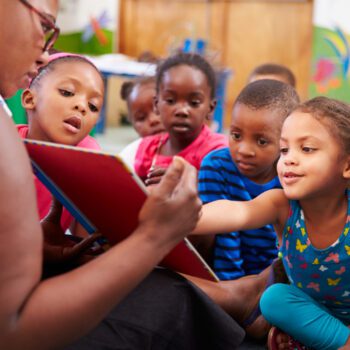
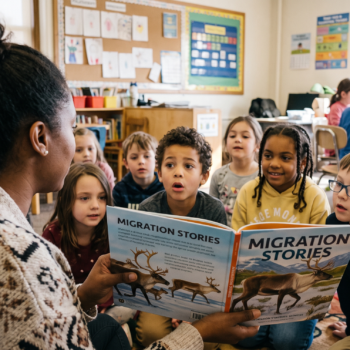
    A teacher reads aloud a nonfiction book called Migration Stories to a captivated group of elementary students sitting on a classroom rug, with several children leaning in with wide-eyed expressions.

    Building background knowledge is the deliberate teaching of content (science, history, the arts) so students develop the web of associations they need to comprehend increasingly complex texts. It matters because comprehension isn’t a free-floating skill. A student understands a passage largely to the degree they already know something about its topic, which means the knowledge you build is the comprehension you get.

    Read More

  • Understanding Vocabulary Tiers: A Guide for Elementary Teachers

    Vocabulary tiers

    You know how we teach phonics patterns in a specific sequence? We start with those simple CVC words before tackling vowel teams and eventually multisyllabic words. Well, back in 1985, literacy researchers Isabel Beck and Margaret McKeown realized vocabulary needs a similar thoughtful approach. They noticed that not all words serve the same purpose in language development and created what we now call vocabulary tiers.

    Read More

  • What Is Orthographic Mapping? The Science of How Words Stick

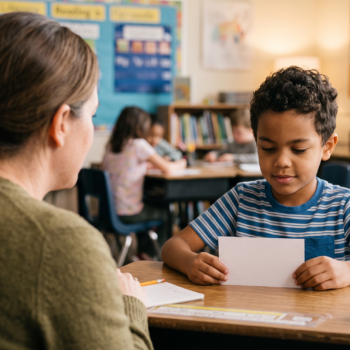
    A teacher and student sit together at a desk, both looking at a word card the boy is holding up.

    Orthographic mapping is the mental process the brain uses to permanently store a word, by bonding its sounds to its spelling and meaning so it can be recognized instantly on sight. It matters for teachers because this bonding, not repetition, is what turns a word a student has to decode into a word she simply knows. A reader who maps words well builds a sight vocabulary in the tens of thousands; a reader who can’t is stuck sounding out the same words over and over.

    Read More

  • Beyond the Book: Essential Read Aloud Activities for Elementary Teachers

    read aloud activities

    As teachers in the trenches, we know that read aloud activities should be cornerstone moments in our literacy instruction. But let’s be honest—it’s tough to elevate these sessions beyond just sharing a good story when we’re juggling a million other things! We sense there’s so much more potential in those 15-20 minutes, but transforming that feeling into purposeful read aloud activities can be challenging.

    Read More

  • The Power of Classroom Read Alouds: Transforming Reluctant Readers

    classroom read aloud

    You’re wrapping up a hectic morning of literacy centers when you announce it’s read aloud time. Suddenly, the energy shifts. Even your most reluctant readers perk up – and that moment taught me just how powerful a classroom read aloud can be for developing literacy skills. If you’re like me, sneaking in professional reading during prep periods, this might be exactly what you need to hear.

    Read More

  • Why Read Aloud is Important: The Hidden Power Behind Story Time

    Why Read Aloud Is Important

    You know that magical moment when you pull out a read aloud book and suddenly your most reluctant reader scoots closer, completely captivated by the story? When even your wiggliest students settle in, hanging on every word? If you’re like me, sipping something caffeinated while planning tomorrow’s lessons, let’s explore why read aloud is important for every child in your classroom.

    Read More

  • Sold a Story Podcast Review: Why You Need to Listen From a Teacher Who Wishes She Had Heard it Sooner

    sold a story

    Grab your favorite beverage and settle in, because we need to talk about something that’s been weighing heavily on my heart lately – the “Sold a Story” podcast. Like many of you, I’ve spent years in the classroom trying my best to help every child learn to read. And like many of you, I thought I was doing everything right. Then I listened to “Sold a Story.”

    Read More

  • Reading Comprehension Strategies That Actually Build Understanding

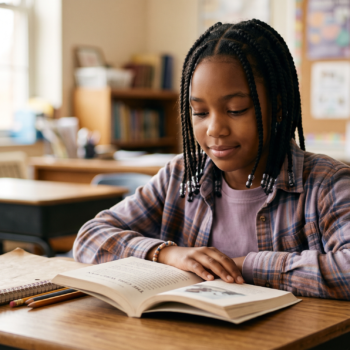
    A smiling middle school student reads an open novel independently at her desk, notebook and pencils beside her.

    Reading comprehension strategies are the thinking processes skilled readers use, often without realizing it, to make meaning while they read: monitoring for confusion, asking questions, making inferences, and connecting new information to what they already know. They matter because comprehension isn’t automatic for every student. Fluent decoders can still finish a passage without absorbing it, and strategies are how a teacher makes the invisible work of active reading explicit.

    Read More

  • Wondering Why Vocabulary Is Important? Here’s What Science Tells Us

    why vocabulary is important

    You know when you’re reading aloud to your class, and you hit a word that makes half your students scrunch up their faces in confusion? We’ve all been there! I was working with a teacher who had this exact experience with the word “crampon” during a mountain climbing story. Some kids lit up (thanks, family hiking trips!), while others were totally lost. It’s moments like these that really drive home why vocabulary is important in ways we might not always think about.

    Read More