Why Phonics is Important: A Teacher’s Guide to Better Reading Instruction

Remember your first year teaching reading? Mine was filled with sticky notes, endless Pinterest searches, and late nights wondering if I was doing it right.

Last month, that familiar feeling came rushing back during a grade-level meeting when Jessica shared her struggles with teaching reading. “I feel like I’m failing them,” she whispered, eyes fixed on her lesson plans. “Especially Tommy – he knows his letters, he’s eager to learn, but he just keeps guessing at words.”

I saw heads nodding around the room because we’ve all been there. Let’s explore why phonics is important and how it can transform your reading instruction.

Understanding Why Phonics is Important: Beyond the “Natural Reader” Myth

Can I be totally honest with you? For years, I thought I was doing right by my students by creating a “literacy-rich environment” and teaching phonics only when they seemed to need it. Picture walks, context clues, guessing strategies – these were my go-to tools. Sound familiar?

Here’s what changed my mind: watching too many students hit a wall around third grade if not before. That’s when texts get harder, and those guessing strategies just don’t cut it anymore.

Understanding why phonics is important means acknowledging that reading isn’t a natural process like speaking. Our brains aren’t wired to automatically connect letters with sounds – it’s something that needs to be taught explicitly and systematically.

Why Phonics is Important: The Puzzle of Reading Success

Think of it like teaching a child to complete a complex puzzle. You wouldn’t dump all thousand pieces on the table at once and expect them to figure it out, right? You’d start with the corner pieces, then the edges, teaching them strategies along the way.

That’s the key to understanding why phonics is important in early reading. Each phonics skill is like a puzzle piece that connects to others in specific ways. First, you teach the basics – individual letter sounds are your corner pieces.

Then you connect those with simple blends, short words, and gradually build to more complex patterns. Just like you wouldn’t expect a child to see the whole puzzle picture without understanding how the pieces fit together, we can’t expect them to read without understanding how letters and sounds work together.

As Emily Hanford points out in her “Sold a Story” podcast, many of us were taught that reading would emerge naturally if we just surrounded kids with books. But research consistently shows why phonics is important: systematic, explicit instruction leads to better outcomes for all students.

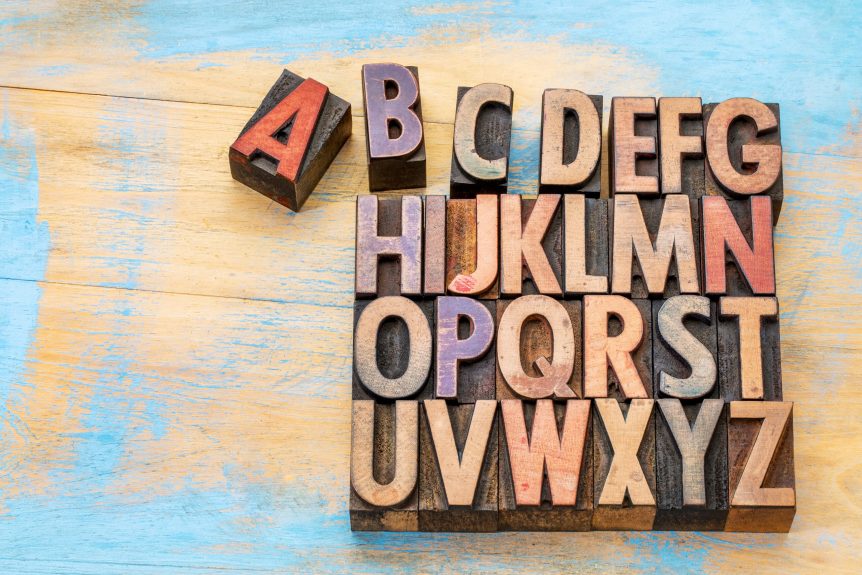
Why Phonics Is Important?

Why Phonics is Important for Building Reading Joy

Oh, this one hits home for me. I used to worry that systematic phonics instruction would kill my students’ love of reading. But the truth is, the kids who don’t understand phonics don’t love what they can’t do.

No matter how many amazing, beautiful books you might have in your classroom library, books alone don’t magically teach a child how to read if they don’t know the code that makes up the words.

Think about it – have you ever seen a child’s face light up when they read their first word completely on their own? That’s not just joy; that’s confidence. And it comes from knowing exactly how to crack the code of reading.

Making Phonics Work in Your Classroom

Let’s get practical here. I know you’re probably thinking, “This sounds great, but I’ve got 25 kids, a packed schedule, and a curriculum I have to follow.” I hear you. Here’s what worked in my classroom:

Start small.
Pick one part of your day where you can be super explicit about phonics instruction. Maybe it’s your morning meeting or small group time. The key is consistency.

Get systematic about it.
Remember our puzzle metaphor? You need a clear plan for introducing and connecting those pieces. That’s why having a solid phonics program matters. (And no, following a program doesn’t make you less of a teacher – it makes you more effective and your students are counting on you to be effective!)

Make it stick with movement and sound.
Have kids tap out sounds, use hand motions, or draw letters in the air. One of my students finally understood the difference between short ‘e’ and short ‘i’ when we started using different gestures for each sound.

Assessment is key.
Regular check-ins help you know if your instruction is working. Keep it simple – quick decodable word reads or nonsense word checks can tell you a lot about whether students are truly understanding phonics patterns.

Why Phonics is Important: Real Results in Real Classrooms

Remember Tommy from the beginning of our chat? Two weeks after implementing systematic phonics instruction, his teacher shared some exciting news during our next meeting. “Tommy read an entire decodable book yesterday,” she beamed. “He didn’t even look at the pictures first!”

This is why phonics is important in every classroom. It’s not just about teaching letters and sounds. It’s about giving our kids the keys to unlock any word they encounter. It’s about watching them transform from guessers into confident readers who can tackle any text that interests them.

Look, I know changing how we teach reading isn’t easy. But you’re not in this alone. We’re all learning and growing together. And trust me – when you see that light switch on in a child’s eyes because they finally understand how words work? That’s everything.

Hello!

My Mission is Simple

Give teachers the science-backed tools they need to help every student become a confident reader.
I’m so glad you’re here! 

Where to Go From Here

Give me the Quiz!

You’ve noticed something isn’t quite right. A student who struggles during read-alouds, avoids writing, or works twice as hard for half the results. Your instincts are telling you something – but what’s next? Download my free 5 Silent Signs of Reading Struggle to identify what you’re seeing and know exactly what to do about it.

Here are a few trusted books from my personal teaching shelf that have guided my practice and might support yours too.

As an Amazon Associate, I earn from qualifying purchases.

A teacher leans in to talk with a young student at a small table in a cozy reading corner
Science of Reading

Phonological Awareness vs Phonics: Why One Comes First

Phonological awareness is the ability to hear and work with the sounds in spoken language, syllables, rhymes, and individual phonemes, with no print involved. Phonics connects those sounds to letters. The difference matters because phonological awareness has to develop first: a student can’t map sounds to letters she can’t yet hear in the first place.

Read More »
A teacher points to words in a decodable reader showing the sentences "Max has a cat" and "The cat can nap" while a young child follows along with both hands on the page.
Science of Reading

Phonics Scope and Sequence: Why the Order You Teach In Matters

A phonics scope and sequence is the planned order in which letter-sound patterns are taught, moving from simple to complex, with each new skill building on the ones before it. It matters because reading is cumulative: a student who misses a rung in the progression stalls at exactly that point, no matter how solid the rungs below it are.

Read More »
A young boy tracks text with his finger as he reads a decodable reader at his classroom desk, with a colorful word wall and well-stocked book shelves visible behind him.
Science of Reading

Phonics Rules: Which Patterns Are Actually Reliable (and Which Aren’t)

Phonics rules are the reliable patterns that connect letters and letter combinations to the sounds they represent: digraphs, vowel teams, silent-e, r-controlled vowels, and the syllable types that organize them. They matter because these patterns are what let a reader decode a word she has never seen before, instead of sounding it out letter by letter and landing on a non-word the way Henry did with rain.

Read More »

Grab your free lesson plan!

You're Just a Click Away!