Science of Reading

  • Structured Literacy vs. Balanced Literacy: What’s Actually Different

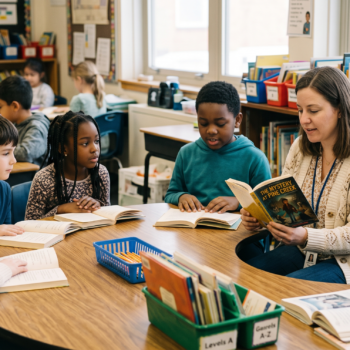
    A teacher reads aloud from a chapter book to five elementary students gathered around a table with open books.

    Structured literacy and balanced literacy are two approaches to teaching reading that differ in what they teach a child to do at an unknown word: balanced literacy trains students to identify it through context, pictures, and sentence structure, while structured literacy teaches them to decode it by connecting letters to sounds. The difference matters because that one habit, repeated thousands of times, is what decides whether a child is building a reading skill or a guessing strategy.

    Read More

  • How to Teach Orthographic Mapping: A Sequence That Sticks

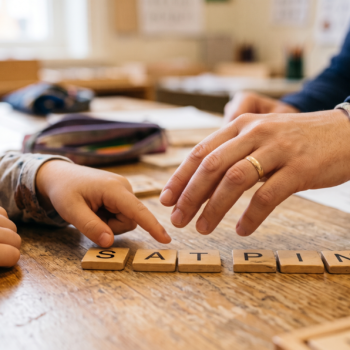
    A teacher's hand guides a student's finger across letter tiles spelling S-A-T and P-I-N on a wooden desk.

    Teaching orthographic mapping means sequencing and pacing instruction so that students bond sounds to spellings, one reliable correspondence at a time, until each word type becomes automatic. It matters because mapping isn’t something you deliver in a lesson. It’s something a student builds across many successful encounters, which makes your job less “cover the skill” and more “sequence the conditions for it to form.”

    Read More

  • Orthographic Mapping Activities: A 10-Minute Routine

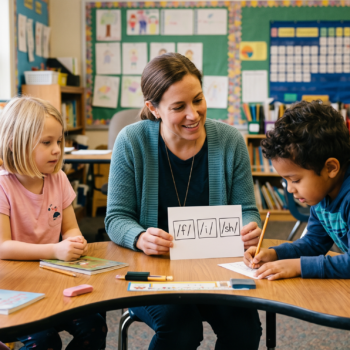
    A teacher holds up a sound box card reading /f/ /i/ /sh/ as students practice an orthographic mapping activity.

    Orthographic mapping activities are short, sound-first routines that help students bond a word’s sounds to its spelling so the word is stored for instant recognition. They matter because this bonding, not repetition, is what moves a word from effortful decoding into automatic sight, which is the difference between a reader who sounds out “the” every time and one who just reads it.

    Read More

  • How to Teach Reading Comprehension So the Thinking Transfers

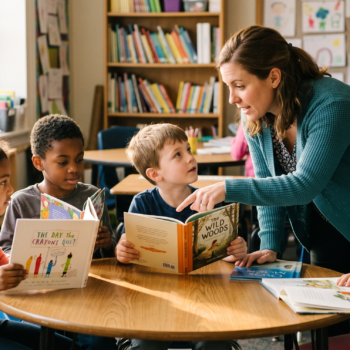
    A teacher leans over a small table, guiding four young readers through a discussion of their picture books.

    Teaching reading comprehension means making your own invisible thinking visible to students, then gradually transferring that thinking to them through modeling and guided practice until they can do it independently. It matters because comprehension can’t be assigned and checked like a worksheet: a student can finish every graphic organizer and still read passively, the way Jasmine did, because nobody ever showed her what the thinking sounds like.

    Read More

  • What Is Reading Comprehension? A Clear Definition for Teachers

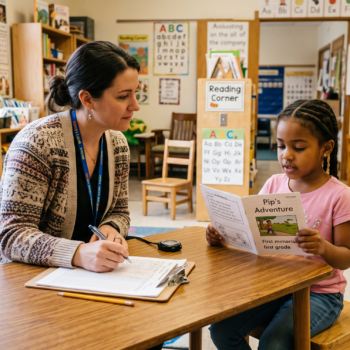
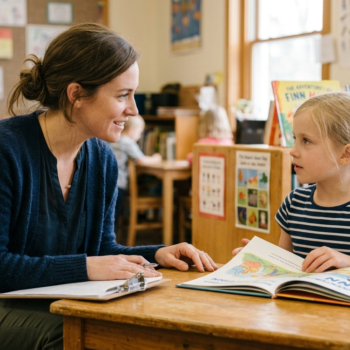
    A teacher and young student discuss an open picture book together at a classroom table.

    Reading comprehension is the process of constructing meaning from written text. It is not simply recognizing the words on the page; it is building an understanding of what those words add up to by connecting them to what you already know. Comprehension is the goal of reading itself, which means a student who decodes accurately but cannot make meaning has not finished reading at all. She has finished half of it.

    Read More