Orthographic Mapping

  • How to Teach Orthographic Mapping: A Sequence That Sticks
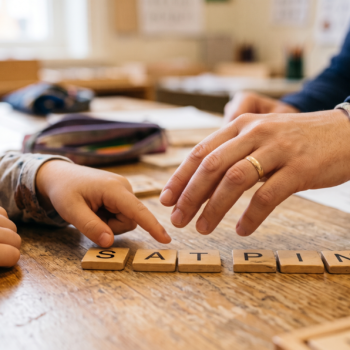
    A teacher's hand guides a student's finger across letter tiles spelling S-A-T and P-I-N on a wooden desk.

    Teaching orthographic mapping means sequencing and pacing instruction so that students bond sounds to spellings, one reliable correspondence at a time, until each word type becomes automatic. It matters because mapping isn’t something you deliver in a lesson. It’s something a student builds across many successful encounters, which makes your job less “cover the skill” and more “sequence the conditions for it to form.”
    Read More

  • Orthographic Mapping Activities: A 10-Minute Routine

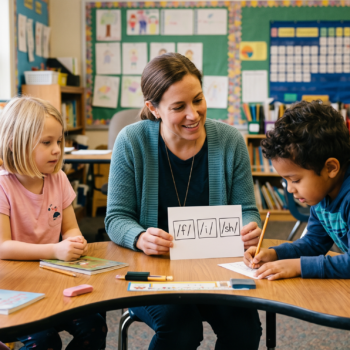
    A teacher holds up a sound box card reading /f/ /i/ /sh/ as students practice an orthographic mapping activity.

    Orthographic mapping activities are short, sound-first routines that help students bond a word’s sounds to its spelling so the word is stored for instant recognition. They matter because this bonding, not repetition, is what moves a word from effortful decoding into automatic sight, which is the difference between a reader who sounds out “the” every time and one who just reads it.

    Read More

  • What Is Orthographic Mapping? The Science of How Words Stick

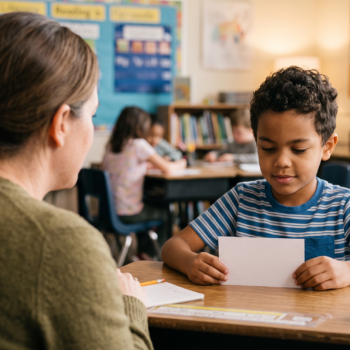
    A teacher and student sit together at a desk, both looking at a word card the boy is holding up.

    Orthographic mapping is the mental process the brain uses to permanently store a word, by bonding its sounds to its spelling and meaning so it can be recognized instantly on sight. It matters for teachers because this bonding, not repetition, is what turns a word a student has to decode into a word she simply knows. A reader who maps words well builds a sight vocabulary in the tens of thousands; a reader who can’t is stuck sounding out the same words over and over.

    Read More