L is for Literacy
The Science of Reading Simplified

Mae Among the Stars: The Picture Book That Proves Dreams Are Worth Reaching For
Have you ever watched a student’s eyes light up when they suddenly realize their biggest, most impossible-seeming dream might actually be achievable? That’s exactly what happens when teachers share Mae Among the Stars in their classrooms. This isn’t just another “follow your dreams” book—it’s a story that gives children concrete permission to think beyond the boundaries others might set for them, wrapped in gorgeous illustrations and grounded in the real-life inspiration of astronaut Mae Jemison.
What makes Mae Among the Stars particularly powerful is how it handles that delicate balance between supporting big dreams while acknowledging the work required to achieve them. Students consistently respond to Mae’s determination and her family’s unwavering support, but they also connect with the practical message that dreams require both believing and working hard.
Meet Mae: A Dreamer Who Reaches for the Stars
Mae Among the Stars follows young Mae, a girl who knows exactly what she wants to be when she grows up—an astronaut who can see Earth from space. When her family gently points out that Earth is all around them, Mae clarifies her vision: she wants to see Earth “from out there.” Her mother’s response becomes the heart of the book: “Of course you can. If you can dream it, if you believe it and work hard for it, anything is possible.”
Written by Roda Ahmed and illustrated by Stasia Burrington, this picture book takes about 10-15 minutes to read aloud and works beautifully for grades K-5. The story is inspired by astronaut Mae Jemison, the first African American woman to travel to space, though the book focuses on childhood dreams rather than biographical details. Burrington’s illustrations are absolutely stunning—rich, warm colors that literally seem to glow on the page, with a final spread that shows Mae floating among stars that will take your breath away.
The text is accessible yet sophisticated, making Mae Among the Stars perfect for building both engagement and vocabulary. Students see themselves in Mae’s everyday family moments while being inspired by her extraordinary aspirations.
Building Essential Literacy Skills Through Stellar Storytelling
Mae Among the Stars offers rich opportunities for vocabulary development that teachers find particularly valuable. Words like “astronaut,” “assignment,” and “amazing” appear naturally in context, while more sophisticated vocabulary emerges through discussion—”perseverance,” “determination,” and “aspiration” all flow naturally from Mae’s story.
The book’s structure supports comprehension development beautifully. The clear problem-solution format (Mae has a big dream, faces gentle skepticism, receives encouragement) provides an excellent framework for teaching story elements. Students can easily identify the main character’s motivation and trace how her family’s support helps her maintain confidence in her goals.
For vocabulary instruction, Mae Among the Stars provides wonderful context for discussing both literal and figurative language. When Mae talks about seeing Earth “from out there,” students practice inferencing skills as they work to understand what she means. The mother’s response about dreaming, believing, and working hard introduces abstract concepts that support students’ developing understanding of how goals are achieved.
The book also offers excellent opportunities for building background knowledge about space, careers in science, and family dynamics across cultures. These discussions naturally extend students’ world knowledge while keeping them engaged with Mae’s personal story.
Setting the Stage for Astronomical Discussions
Before reading Mae Among the Stars, spend a few minutes activating students’ thinking about dreams and goals. Ask them to think about something they’ve always wanted to do or become, and whether anyone has ever told them their dream was too big or impossible.
Introduce key vocabulary that will enhance comprehension: “astronaut” (someone who travels to space), “assignment” (work given by a teacher), and “amazing” (wonderful or incredible). If your students aren’t familiar with space travel, briefly explain that astronauts go to space in special vehicles called rockets or space shuttles.
Consider showing students a simple image of Earth from space—this visual reference will help them understand exactly what Mae wants to see and why it’s different from the Earth around us every day. Set the purpose by telling students they’ll meet a girl with a very special dream and discover how her family responds when she shares it.
Bringing Mae’s Journey to Life
When reading Mae Among the Stars aloud, plan strategic stopping points that build engagement and comprehension. After Mae explains her assignment about what she wants to be when she grows up, pause and ask students to predict what Mae might say. This gets everyone invested in her answer.
Stop after Mae’s mother asks, “What will you tell them, Mae?” and give students a moment to think about Mae’s response. When Mae says she wants to “see Earth,” many students will initially think like her family—we’re already on Earth! This creates a perfect teachable moment about listening carefully and asking clarifying questions.
The most powerful stopping point comes when Mae clarifies that she wants to see Earth “from out there.” Watch your students’ faces as understanding dawns—this is when many children realize Mae’s dream is much bigger than they initially thought. Use this moment to discuss how Mae’s family could respond to such an ambitious goal.
Students typically respond with excitement and curiosity when they understand Mae’s true aspiration. Some may express doubt (“Can kids really become astronauts?”) while others immediately embrace the possibility. Both responses provide rich discussion opportunities about supporting each other’s dreams.
Extending the Stellar Learning Experience
After reading Mae Among the Stars, engage students in discussions that deepen their understanding of the story’s themes. Ask them why Mae’s mother said “Of course you can” instead of listing all the challenges of becoming an astronaut. This leads to meaningful conversations about how encouragement helps people pursue difficult goals.
Consider having students create their own “dream assignments” similar to Mae’s school project. They can write or draw about their aspirations while thinking about the steps they might need to take to achieve them. This connects directly to the book’s message about the importance of both dreaming and working hard.
The book connects beautifully to science learning about space, Earth, and astronomy. Students often become fascinated with learning more about astronauts, space travel, and what Earth actually looks like from space. These connections build background knowledge while maintaining engagement with the story’s core themes.
For writing extensions, students can explore family support by writing about a time someone encouraged them to try something new or challenging. Mae Among the Stars also works wonderfully for discussions about perseverance and goal-setting across the curriculum.
Teacher Talk: How to Get the Most Out of “Mae Among the Stars”
Mae Among the Stars works best when you give students time to really absorb the illustrations—they’re truly spectacular and add so much to the story’s emotional impact. Don’t rush through the final spread showing Mae among the stars; let students drink in that gorgeous artwork.
The book handles the balance between big dreams and realistic planning beautifully, so avoid the temptation to add disclaimers about how hard it is to become an astronaut. Mae’s mother’s response models exactly the right approach—encouragement paired with the reality that dreams require work.
Students from all backgrounds connect with Mae’s story, but it’s particularly powerful for children who don’t often see themselves reflected in books about careers in science and space. The book’s focus on family support rather than individual achievement creates opportunities for discussing how communities help each other reach goals.
If you have reluctant dreamers in your class, Mae Among the Stars often helps them begin thinking more expansively about their own possibilities. The story’s message is perfectly calibrated—ambitious enough to inspire, grounded enough to feel achievable.
The Science Behind Inspirational Read Alouds
Mae Among the Stars exemplifies how quality literature supports students’ developing sense of possibility and self-efficacy. Research shows that children who see diverse characters pursuing ambitious goals are more likely to develop expansive views of their own potential. The book’s combination of family support and personal determination provides an excellent model for how dreams become reality.
The story’s clear structure and rich vocabulary make it an ideal choice for building both comprehension skills and background knowledge. When students connect emotionally with characters like Mae, they’re more likely to engage deeply with the learning opportunities the text provides.
Most importantly, Mae Among the Stars demonstrates how read alouds can be both academically valuable and emotionally nurturing. Students develop literacy skills while also developing confidence in their own ability to dream big and work toward meaningful goals.
Reaching for Your Own Teaching Stars
Mae Among the Stars reminds us that one of our most important jobs as teachers is helping students see the full scope of their potential. When we share books like this one, we’re not just building reading skills—we’re expanding children’s understanding of what’s possible for their own lives.
This gorgeous book proves that literature can be both academically rigorous and deeply inspiring. Mae’s story stays with students long after the final page, influencing how they think about their own dreams and the support they can offer to friends facing big challenges.
In a world where students sometimes receive mixed messages about the value of ambitious goals, Mae Among the Stars offers the perfect response: dream it, believe it, work hard for it—anything is possible.

Written by Roda Ahmed
Illustrated by Stasia Burrington
Grade Level
K – 3rd Grade
Time to Read
10-15 minutes
Core Skills
Vocabulary development, comprehension, inferencing, goal-setting
Key Vocabulary
astronaut
a person who travels to space in rockets or space shuttles
assignment
work or a project given by a teacher
amazing
wonderful, incredible, or awesome
aspiration
a big dream or goal you want to achieve
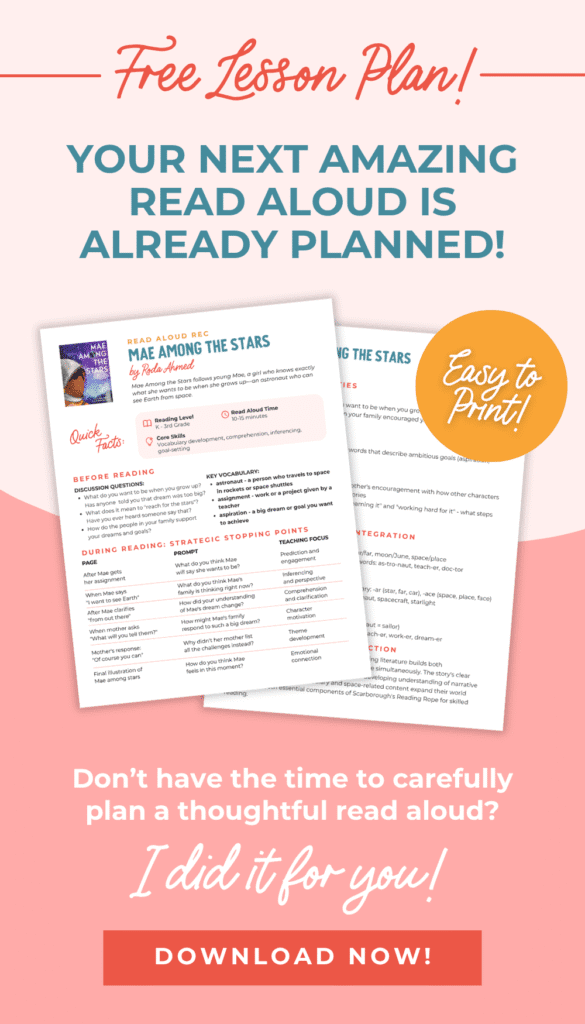
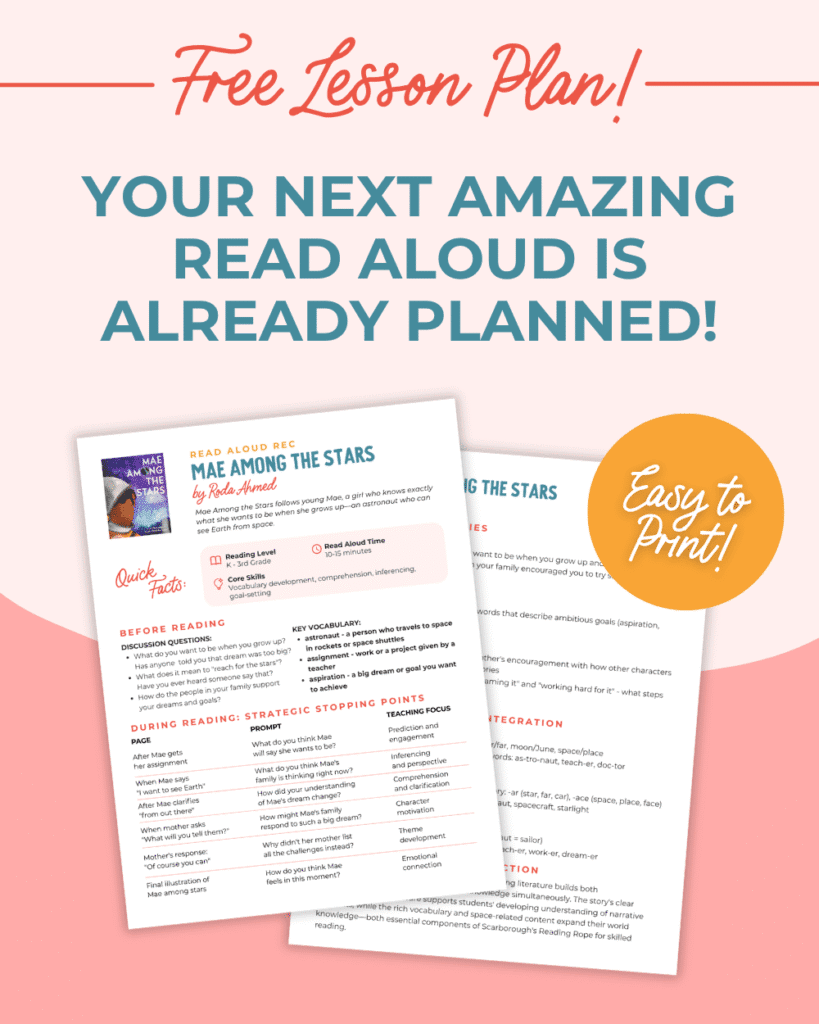
Wish You Could Download This Post As a Beautifully Formatted Lesson Plan?
You Can!!
I know that as much as you want to, you don’t always have time to carefully plan a thoughtful read aloud. That’s why I did the hard work for you! Everything you need is in this downloadable Read Aloud Lesson Plan for “Mae Among the Stars” All of the vocabulary notes, pre-reading questions, strategic stopping points, and ways to extend the learning beyond the story are ready to go, just for you!
Download the free guide and you’ll have everything you need at your fingertips!