L is for Literacy
The Science of Reading Simplified

Jabari Jumps Read-Aloud Lesson Plan
You know that moment when a student stands at the edge of something new—maybe it’s reading aloud for the first time, joining a group discussion, or attempting a challenging math problem—and you can see them gathering courage?
They’re not refusing or being difficult. They’re doing the internal work of convincing themselves they’re ready. That’s exactly what makes Jabari Jumps such a powerful teaching tool.
Gaia Cornwall captures this universal experience with remarkable honesty. Jabari has passed his swimming test. He knows he can do this. But standing at the top of that diving board, he still needs time to work up his nerve.
And while students connect deeply with Jabari’s emotional journey, they’re simultaneously building critical comprehension skills—inferring feelings that aren’t explicitly stated, tracking how a character’s thinking evolves, and understanding that bravery doesn’t mean fearlessness. This book validates your students’ experiences while teaching them to read like strategic thinkers.
Why This Book Works for Structured Literacy
If you’re implementing more systematic phonics instruction, you might question where picture book read-alouds fit. Here’s what research tells us: while systematic phonics builds decoding skills, strategic read-alouds develop the language comprehension that students need to understand what they’re reading. Jabari Jumps delivers powerful comprehension instruction.
Inferencing & Reading Between the Lines
The brilliance of Jabari Jumps lies in what it doesn’t say directly. The text never states “Jabari feels scared.” Instead, we watch him walk “very, very slowly” up the ladder, sit down because he’s “a little tired,” and insist he’s “not scared at all.”
Students must infer the gap between Jabari’s words and his actual feelings, using illustration clues and their own experiences. This inferential thinking separates strong comprehenders from struggling ones. When students recognize subtext—understanding that Jabari’s stalling reveals his nervousness—they’re developing the sophisticated thinking required for complex narratives.
Vocabulary in Meaningful Contexts
Jabari Jumps introduces Tier 2 vocabulary that students need across academic settings: “surprised,” “bravery,” and “diving board.” But the real power comes in how Dad defines “bravery”—not as abstract courage, but as a concrete technique: taking a deep breath and saying “I am ready.”
This specific, actionable definition helps students grasp an abstract concept through meaningful context, building the nuanced vocabulary knowledge that supports both comprehension and academic success.
Narrative Structure That Supports Comprehension
This story follows a clear problem-solution structure: Jabari wants to jump (goal), feels nervous (obstacle), receives support (Dad’s patient advice), and achieves success (the jump).
Understanding this structure helps students predict what might happen next, recognize similar patterns in other texts, and organize their thinking about stories. When students can identify problems and track solutions, they’re building a comprehension framework they’ll use throughout their reading lives.
Before Reading
Discussion Questions:
- Have you ever wanted to do something brave but felt nervous about trying it? What was it, and how did your body feel when you were nervous?
- Can you be brave and still feel a little scared at the same time? What does that look like?
- Think about a time when someone helped you feel ready to try something new. What did they say or do that helped?
Key Vocabulary:
- diving board – platform for jumping into water
- determined – committed to doing something despite difficulty
- surprised – feeling unexpected about something
- concentrate – focus your attention on one thing
During Reading – Strategic Stopping Points
| PAGE/MOMENT | PROMPT | TEACHING FOCUS |
| After Jabari announces he’s jumping today | How do you think Jabari feels about his plan? What makes you think that? | Making predictions based on character’s expression |
| When Jabari says “I’m not scared” but walks “very, very slowly” | Do you believe Jabari when he says he’s not scared? Why or why not? | Inferring—recognizing when actions contradict words |
| When Jabari sits down because he’s “a little tired” | Why do you think Jabari really sat down? Is he tired, or might there be another reason? | Understanding character motivation and internal conflict |
| When Dad shares his bravery technique | Why does Dad share his own strategy instead of telling Jabari to hurry? What does this tell you about Dad? | Analyzing supportive relationships; perspective-taking |
| When Jabari takes his deep breath and thinks “I am ready” | What changed for Jabari between when he sat down and now? What helped him? | Identifying turning points; cause and effect |
| After Jabari surfaces with a huge smile | How does Jabari feel now compared to earlier? What words describe his feelings? | Tracking character development; emotional vocabulary |
Making This Lesson Work in Your Real Classroom
Timing & Scheduling Tips:
Plan 15-20 minutes for your first read-through with discussion. Jabari Jumps works beautifully at the beginning of the year when you’re building classroom community around the idea that trying new things requires courage, or before challenging tasks like standardized testing when students need reminders that bravery means doing hard things even when you’re nervous.
Classroom Management Strategies:
For this emotionally resonant book, use Turn-and-Talk at key inferential moments. After asking “Do you believe Jabari when he says he’s not scared?”, give 10 seconds of silent think time, then have partners share using this frame: “I think Jabari feels _____ because I noticed _____.” This protocol ensures every student processes their thinking, builds academic language, and lets you listen in on conversations before bringing the group back together.
Differentiation That Actually Works:
For Emerging Readers & English Language Learners: Pre-teach “diving board” and “bravery” using photos or video clips of real diving boards and people gathering courage before trying something new. Create a simple feelings chart with faces showing “excited,” “nervous,” “brave,” and “proud” that students can point to when describing Jabari’s emotions throughout the story.
For Advanced Readers & Thinkers: Push deeper analysis by asking students to consider how the story would change if Dad had said “Don’t be silly, just jump!” instead of sharing his own bravery strategy. How would that different response have affected Jabari and the story’s outcome?
Extension Activities
Writing Connection:
Students write a sequel page called “Jabari Tries Something New,” choosing another challenging activity (riding a bike without training wheels, reading to the class, making a new friend) and describing how Jabari would use his bravery.
For younger writers, provide sentence starters: “Jabari wanted to try _____. At first he felt _____. Then he remembered to _____.”
Vocabulary Development:
Create a “Bravery Word Wall” where students collect words describing different aspects of courage. Start with words from Jabari Jumps (surprised, bravery, ready), then add synonyms as students encounter them (courage, nervous, confident, determined). Students illustrate each word, creating a visual reference for future writing about characters facing challenges.
Comprehension Builder:
Map Jabari’s emotional journey using a sequence chart with four boxes: “At the beginning,” “When Jabari climbed up,” “After Dad’s advice,” and “After the jump.” Students draw Jabari’s face showing his feelings at each stage and write one sentence describing his thoughts, building understanding of character development.
How This Connects to the Bigger Picture of Reading Instruction
You might wonder how a picture book about jumping off a diving board connects to comprehensive reading development. Here’s the bridge: while systematic phonics builds students’ ability to decode words, strategic read-alouds build the language comprehension skills they need to understand what those words mean.
Oral Language Foundations
Listening comprehension develops before reading comprehension. When you read Jabari Jumps aloud, students access sophisticated narrative structure and complex character development beyond what most K-3 students can decode independently. They’re building comprehension strategies (inferencing, predicting, analyzing motivation) that they’ll eventually apply to texts they read themselves.
The discussions you facilitate teach students how strategic readers think—noticing when actions contradict words, tracking emotional changes, connecting experiences. These thinking patterns become internalized and transfer to independent reading.
Background Knowledge Building
Every read-aloud builds students’ schema about how the world works, directly impacting future comprehension. Jabari Jumps develops understanding of managing fear, patient parent-child relationships, and the concept that bravery isn’t fearlessness—it’s acting despite fear.
This becomes background knowledge students bring to future texts about characters facing challenges or managing difficult emotions. The more varied experiences students encounter through read-alouds, the more mental frameworks they have for comprehending new texts.
Being intentional transforms casual story time into powerful literacy instruction. Jabari Jumps isn’t just a sweet story—it’s strategically selected to build specific comprehension skills. The stopping points target inferencing, character analysis, and emotional vocabulary.
Structured Literacy Integration
Compound Words & Morphology:
Jabari Jumps contains compound words perfect for decoding practice: “diving board,” “something,” and “everybody.” Have students physically build these using letter tiles—first “dive” and “ing” to make “diving,” then “board,” then push them together. This concrete manipulation helps students understand that compound words are literally two smaller words combined. Students can hunt for other compound words during rereads, strengthening their ability to recognize meaningful word parts.
Syllable Work with Names:
Use “Jabari” for syllable segmentation practice—it’s a three-syllable name (Ja-bar-i) that students can clap, tap, or jump out. Compare it to single-syllable names in your classroom, building phonological awareness of syllable units. Students can segment other multisyllabic words from Jabari Jumps (“div-ing,” “read-y,” “ev-ery-bod-y”), using visual syllable boxes to match each syllable as they say it.
The Science of Reading Connection
Jabari Jumps demonstrates how effective literacy instruction integrates multiple skills simultaneously. While the engaging story maintains attention, you’re systematically building vocabulary, developing inferencing skills, strengthening background knowledge, and teaching comprehension strategies.
This reflects what research tells us: skilled reading requires both accurate word reading AND language comprehension working together. Your systematic phonics builds the word-reading side; strategic read-alouds like this build the language comprehension side. Students need both to become proficient readers.
Why Jabari Jumps Deserves a Place on Your Bookshelf
Beyond its instructional power, Jabari Jumps is simply a beautiful story that kids love. The illustrations capture the shimmering water, the crowded pool deck, and most importantly, the subtle shifts in Jabari’s expressions as he works through his feelings. Students will recognize themselves in Jabari—that mix of determination and doubt, the desire to be brave while still feeling nervous.
What makes this book special is the relationship between Jabari and his dad. There’s no pressure, no disappointment, just patient presence and shared wisdom. That’s the kind of support students need as they navigate their own scary moments, and seeing it modeled in this story helps them understand what healthy encouragement looks like. Which of your students needs to hear this message today—that being brave doesn’t mean not feeling scared?
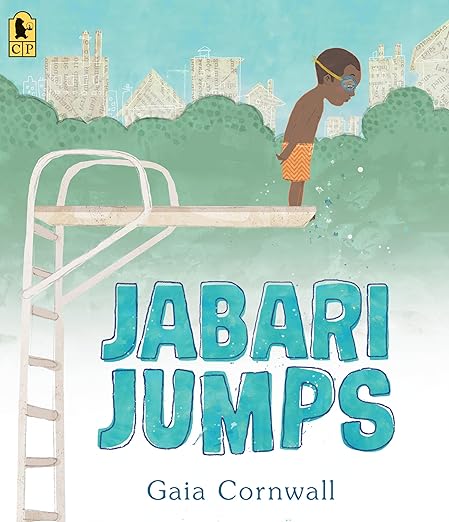
Written and Illustrated by Gaia Cornwall
Grade Level
Pre-K – 2nd Grade
Time to Read
10-15 minutes
Core Skills
Emotional regulation, perseverance, self-talk strategies, vocabulary development
Key Vocabulary
diving board
platform for jumping into water
determined
committed to doing something despite difficulty
surprised
feeling unexpected about something
concentrate
focus your attention on one thing
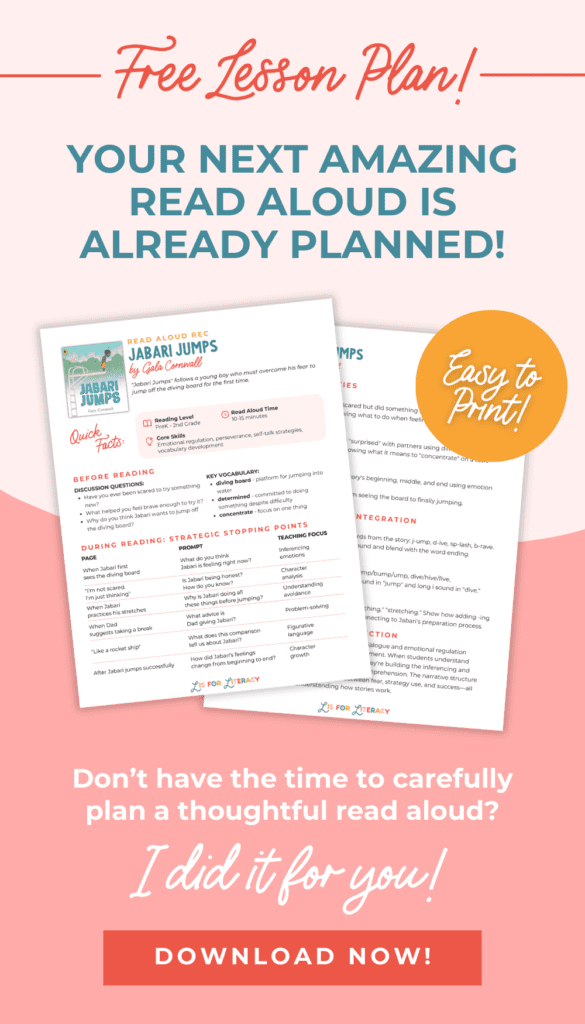
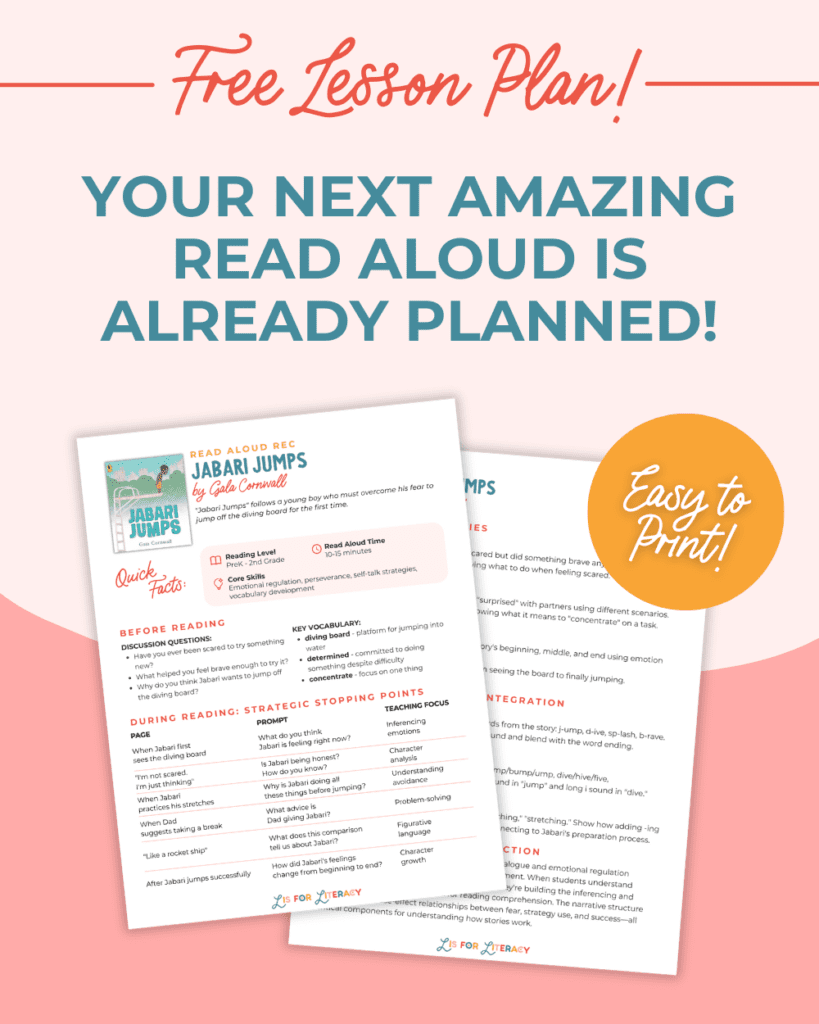
Wish You Could Download This Post As a Beautifully Formatted Lesson Plan?
You Can!!
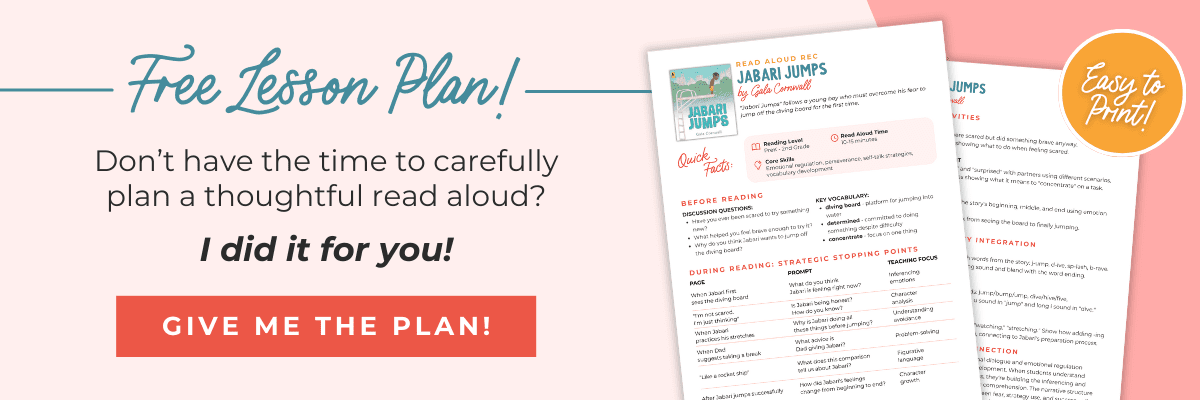
I know that as much as you want to, you don’t always have time to carefully plan a thoughtful read aloud. That’s why I did the hard work for you! Everything you need is in this downloadable Read Aloud Lesson Plan for “Jabari Jumps?” All of the vocabulary notes, pre-reading questions, strategic stopping points, and ways to extend the learning beyond the story are ready to go, just for you!
Download the free guide and you’ll have everything you need at your fingertips!