L is for Literacy
The Science of Reading Simplified

The Magical Yet Read-Aloud Lesson Plan
Picture the scene: It’s October, and you’re watching a first grader—let’s call her Maya—stare at her math worksheet with tears pooling in her eyes. “I can’t do it,” she whispers, arms crossed, pencil abandoned. Sound familiar? We’ve all had that moment when a student decides they’re simply not capable, that struggle means they’re broken somehow.
What strikes me most about these moments isn’t the actual difficulty of the task—Maya could absolutely count to twenty with support. It’s the language. “I can’t” feels so final, so absolute, like a door slamming shut on possibility. And that’s exactly why The Magical Yet by Angela DiTerlizzi has become one of my most-reached-for books during those first challenging months of school.
This isn’t just a story about trying hard (though your students will absolutely connect with the young cyclist who keeps falling off her bike). The Magical Yet is strategic vocabulary instruction wrapped in a growth mindset framework.
The book teaches students that one small word—”yet”—transforms hopelessness into possibility, while simultaneously building inferencing skills, emotional vocabulary, and understanding of cause-and-effect relationships. When you teach The Magical Yet with intentional discussion, you’re giving students both the language and the comprehension skills they need to reframe challenges throughout their learning lives.
Why This Book Works for Structured Literacy
Vocabulary in Meaningful Contexts
The Magical Yet delivers exactly the kind of Tier 2 vocabulary instruction that research tells us matters most. Words like “perseverance” and “determination” appear frequently across academic contexts, but they’re abstract concepts that young students rarely encounter in everyday conversation.
This book embeds these sophisticated words in scenarios K-3 students recognize immediately—failing at bike riding, losing a race, struggling to learn something new. The repetitive text structure (“I can’t… yet”) provides multiple exposures to growth mindset language, while the varied illustrations show what persistence actually looks like in different situations. Students aren’t just hearing these words; they’re seeing them in action.
Inferencing Through Dual Texts
DiTerlizzi’s storytelling relies on the interplay between words and Lorena Alvarez’s vibrant illustrations, creating constant opportunities for inference-making. The text might simply state “you couldn’t pedal and you couldn’t steer,” but students must read the illustrations to understand the emotional journey—the frustration visible in the child’s posture, the determination that brings her back to try again.
This dual-text structure mirrors exactly how skilled readers construct meaning from multiple sources. When you explicitly teach students to integrate what the words say with what the pictures show, you’re building a comprehension skill they’ll use for life.
Background Knowledge About Learning Itself
Perhaps most powerfully, The Magical Yet builds schema about how learning actually works—that struggle is normal, that abilities develop through practice, that initial failure doesn’t predict final outcomes.
This background knowledge becomes foundational for comprehending countless future texts about people overcoming obstacles, whether that’s a biography of a scientist, a story about a character learning to read, or an informational text about how experts develop skills. Students who internalize the “yet” framework understand achievement narratives in ways that support deeper comprehension across all their reading.
Before Reading
Discussion Questions:
- What’s something that felt impossible when you first tried it, but now you can do it easily?
- When you’re learning something new and it’s really hard, what does your brain tell you? What does your body feel like?
- Have you ever watched someone else do something amazing and thought “I could never do that”? What was it?
Key Vocabulary:
- perseverance – continuing to try even when something is difficult or takes a long time to learn
- frustration – the uncomfortable feeling you get when something doesn’t work the way you want it to
- determination – deciding firmly that you will keep trying until you succeed at something
During Reading – Strategic Stopping Points
| PAGE/MOMENT | PROMPT | TEACHING FOCUS |
|---|---|---|
| Opening (child standing next to fallen bike) | What clues in the illustration tell you how this character is feeling right now? | Making inferences from visual details; reading body language and facial expressions |
| “Like that shiny, new bike you couldn’t ride…” | Why do you think new things are often harder than we expect them to be? | Connecting to personal experience; understanding that initial difficulty is normal |
| “You couldn’t pedal and you couldn’t steer and you couldn’t get that bike into gear” | If you were this child’s friend, what would you say to encourage them? | Developing empathy; practicing growth mindset language |
| When the child falls after attempting a wheelie | Even when we’re getting better, we still make mistakes. Why doesn’t this mean we should quit? | Understanding that progress isn’t linear; distinguishing setbacks from failure |
| First appearance of “the Magical Yet” | How does adding the word “yet” change what’s possible? What makes it “magical”? | Analyzing how specific words shift meaning; understanding growth mindset language |
| Various characters showing skills they’ve mastered | What had to happen between “I can’t” and “I can”? What’s the invisible part? | Inferring the practice and time between failure and success |
| Final celebration pages | Which of these achievements do you think took the most tries? How can you tell? | Comparing and evaluating; understanding different skills require different amounts of practice |
Making This Lesson Work in Your Real Classroom
Timing & Scheduling Tips: The Magical Yet takes 10-12 minutes for a complete read with strategic discussion stops, making it ideal for morning meeting or the opening of your literacy block.
This book works particularly well during the first weeks of school when you’re building classroom culture, or immediately before introducing a challenging new skill when students need concrete language for handling difficulty. I’ve also pulled it out mid-year when a student’s fixed mindset language starts spreading through the class—sometimes one strategic reread is exactly what everyone needs.
Classroom Management Strategy: Turn-and-Talk with Sentence Frames
At each stopping point, use structured partner talk to keep every student engaged while building academic discussion skills. First, display this sentence frame on your board: “I think ____ because in the illustration I can see ____.” Give students 15 seconds of silent thinking time (use a visible timer—this prevents fast processors from dominating while giving all students time to formulate ideas).
Then have students turn to their elbow partner and each share their thinking using the frame. Finally, call on 2-3 partnerships to share their conversation with the whole group.
This structure works brilliantly with The Magical Yet because the book’s message about trying new things creates a safe environment for students who typically hesitate to speak up—you can explicitly connect taking risks in discussion to the book’s theme. The sentence frames provide scaffolding that helps students move beyond “I don’t know” while teaching them to support their thinking with evidence.
Differentiation That Actually Works
For Emerging Readers & English Language Learners: Before reading, create simple gestures for your three key vocabulary words—a “keep trying” motion for perseverance, crossing arms with a frustrated expression for frustration, and a determined fist pump for determination.
During the read-aloud, pause occasionally to ask “Which word matches what’s happening right now?” and have students respond with the appropriate gesture. This kinesthetic connection makes abstract emotional vocabulary concrete and accessible for students still building English proficiency or those who process language differently.
For Advanced Readers & Thinkers: After the read-aloud, challenge these students to create a “Yet Timeline” for one of the skills shown in the book (or a skill from their own life), illustrating or writing about the steps between “I can’t” and “I can.”
Push them to include not just the visible practice moments, but also the invisible elements—feeling frustrated, asking for help, trying a different approach, taking breaks. This metacognitive work develops their understanding of learning as a process while extending the book’s themes.
Extension Activities
Writing Connection: Have students complete a “Can’t… Yet” journal entry where they identify one thing they want to learn this year and explain their plan for practice. Kindergarteners and early first graders can draw their goal with teacher or peer help writing the labels:
“I want to read chapter books. I will practice every day. I can’t do it… yet!” Second and third graders can write 4-6 sentences describing their goal, why it matters to them, how they’ll practice, and who can help them. This writing connects directly to the book’s central concept while giving you insight into students’ goals and self-perception as learners.
Vocabulary Development: Create a three-column “Magical Yet” anchor chart with the headers “Perseverance,” “Frustration,” and “Determination.” Throughout the week, whenever you observe students demonstrating these concepts, add their name and a brief description to the chart: “Marcus showed perseverance when he kept trying to solve that word problem.”
This provides the 7-12 meaningful exposures students need to truly own new vocabulary while reinforcing the exact behaviors you want to cultivate. By Friday, every student should appear on the chart at least once—if some haven’t, actively look for opportunities to acknowledge their growth mindset behaviors.
Comprehension Builder: Use a two-column T-chart labeled “Without Yet” and “With Yet” to help students understand how this single word transforms meaning. In the left column, write fixed mindset statements students have actually said: “I can’t read this book,” “I can’t make friends,” “I can’t do multiplication.”
In the right column, add “yet” to each statement and discuss what becomes possible when we use this word. This visual organizer reinforces the book’s central message while teaching students that specific words can dramatically shift a sentence’s meaning—a crucial comprehension insight.
How This Connects to the Bigger Picture of Reading Instruction
If you’re working to align your teaching more closely with what research tells us about reading development, you might wonder whether spending time on social-emotional content takes away from essential literacy skills. The Magical Yet demonstrates why that concern misses something important about how reading comprehension actually develops.
Oral Language as the Foundation
In kindergarten through second grade, students’ listening comprehension consistently runs ahead of their reading comprehension—they can understand sophisticated ideas when they hear them aloud that they couldn’t yet decode independently. This is precisely why strategic read-alouds matter so much.
When you teach students to make inferences from The Magical Yet’s illustrations, to identify cause-and-effect relationships in the narrative (falling off the bike causes frustration, but perseverance causes eventual success), and to connect story events to their own experiences, you’re developing comprehension strategies they’ll later apply to texts they read themselves.
The sophisticated thinking happens through your intentional stopping points and discussion questions. This is strategic comprehension instruction, not a break from literacy teaching.
Background Knowledge About Achievement
Research shows that what students know about the world predicts their reading comprehension more powerfully than general comprehension strategies alone. The Magical Yet builds specific, valuable schema about how learning works—that abilities develop through effort, that initial failure is normal and expected, that setbacks don’t mean you should quit.
This knowledge becomes essential background for understanding countless texts students will encounter throughout their academic lives: biographies of people who failed repeatedly before succeeding, stories about characters who develop new skills through practice, informational texts about how experts become skilled through deliberate effort. When students read “Thomas Edison tried thousands of times before inventing the lightbulb” in third grade, they’ll comprehend that sentence more deeply because they have schema about persistence from books like The Magical Yet.
The difference between casual read-aloud time and intentional literacy instruction comes down to purpose. You’re not reading The Magical Yet just because it’s encouraging or because students need a break. You’re teaching it strategically because it develops vocabulary, inferencing, background knowledge, and academic discussion skills that students need for reading success. That’s comprehensive literacy instruction.
Structured Literacy Integration
Phonological Awareness – Rhyme Recognition:
The Magical Yet contains natural rhyming patterns woven throughout the verse: “tried/ride,” “steer/gear,” and “track/back.” After reading, return to one of these rhyme pairs and have students identify what sounds they hear at the end of each word that make them rhyme.
Then challenge students to generate additional words in the same family—what other words end with the same sound as “tried” and “ride”? Create a quick list together: cried, slide, hide, guide. This reinforces phonological awareness while showing students how recognizing rhyming patterns helps them read and spell word families.
Compound Words and Morphology:
Several words from The Magical Yet offer accessible entry points for morphology instruction. The word “wheelie” combines “wheel” with the suffix “-ie” (meaning a small or informal version of something). “Upset” joins “up” + “set” to create new meaning.
After reading, write these words large on chart paper and draw lines showing how they break apart: wheel|ie and up|set. Explain that many longer words are actually smaller words or word parts stuck together—when students learn to spot these parts, they can decode and understand words more easily. This foundational morphology work prepares students for the multisyllabic words they’ll encounter as texts become more complex.
The Science of Reading Connection
The Magical Yet aligns with research-based reading instruction by simultaneously developing both strands of literacy: word recognition and language comprehension. While students build decoding skills through systematic phonics instruction elsewhere in your day, this lesson strengthens the language comprehension strand through explicit vocabulary instruction (perseverance, frustration, determination), background knowledge building about how learning works, and verbal reasoning through strategic discussion.
The book’s accessible sentence structures and repetitive pattern (“I can’t… yet”) make sophisticated concepts understandable for young learners while providing multiple exposures to growth mindset language. This is exactly what effective comprehension instruction looks like—systematic teaching of the thinking strategies students need, delivered through engaging text that makes the learning feel joyful rather than laborious.
Why The Magical Yet Deserves a Place on Your Bookshelf
This is the book students will quote back to you months after you’ve read it. Seriously—I’ve had second graders facing challenging subtraction problems whisper “I can’t do it… yet” to themselves, using the exact intonation from the book. There’s something about how DiTerlizzi captures the feeling of wanting to give up, then finding that tiny seed of hope, that sticks with kids in ways most picture books simply don’t.
The illustrations do something remarkable too. Alvarez creates a world where literally everyone is learning something difficult—from the toddler learning to walk to the teenager learning to skateboard to adults mastering new skills. Students notice this.
They start pointing out all the different “yets” happening in the background illustrations, and suddenly they’re seeing their whole lives as a collection of “not yets” instead of a list of failures. That shift in perspective? That’s what makes this book genuinely transformational rather than just another nice story about trying hard.
Which of your students needs to hear that “can’t” isn’t the end of the sentence—that there’s magic waiting in that little word “yet”?
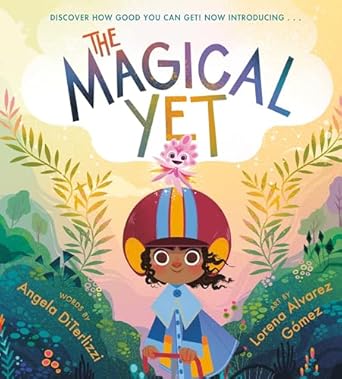
Written by Angela DiTerlizzi
Illustrated by Lorena Alvarez Gómez
Grade Level
PreK – Grade 3
Time to Read
10-12 minutes
Core Skills
Vocabulary development, inferencing, growth mindset language, cause-effect reasoning
Key Vocabulary
perserverance
continuing to try when something is difficult
frustration
uncomfortable feeling when something doesn’t work as wanted
determination
deciding firmly to keep trying until you succeed
Wish You Could Download This Post As a Beautifully Formatted Lesson Plan?
You Can!!
I know that as much as you want to, you don’t always have time to carefully plan a thoughtful read aloud. That’s why I did the hard work for you! Everything you need is in this downloadable Read Aloud Lesson Plan for “The Magical Yet?” All of the vocabulary notes, pre-reading questions, strategic stopping points, and ways to extend the learning beyond the story are ready to go, just for you!
Download the free guide and you’ll have everything you need at your fingertips!