L is for Literacy
The Science of Reading Simplified

Duck on a Bike: The Confidence-Building Read Aloud That Makes Every Student Want to Take Risks
Found yourself between guided reading groups with a few minutes to spare? Let me tell you about a picture book that’s been creating magic in elementary classrooms everywhere. Teachers consistently discover that Duck on a Bike by David Shannon delivers something special—a story that builds confidence while naturally supporting structured literacy components.
What makes this book particularly valuable is how it celebrates the kind of courage we’re asking students to show every day in their reading journey. Just like Duck taking that first wobbly ride, our students are constantly trying new things, facing challenges, and building skills through practice. Duck on a Bike captures that universal experience in a way that resonates deeply with young learners.
A Duck with Dreams and a Red Bicycle
Duck on a Bike tells the delightful story of a duck who gets a wild idea—he wants to ride a bike! Despite the skeptical reactions from his barnyard friends, Duck climbs on and begins his cycling adventure. At first he’s slow and wobbly, but as he rides past each animal, his confidence and skills grow.
Age/Grade Level: Perfect for K-3 (ages 4-8)
Read Aloud Time: Approximately 8-10 minutes
Text Structure: Repetitive, predictable pattern with clear dialogue
Illustrations: David Shannon’s expressive artwork perfectly captures each character’s personality
The story celebrates perseverance, taking risks, and believing in yourself—themes that create natural connections to students’ own learning experiences while building essential literacy skills.
The Structured Literacy Gold Hidden in This Barnyard Tale
Duck on a Bike offers rich opportunities to support reading development within a structured literacy framework. The repetitive sentence pattern provides excellent exposure to high-frequency words while the clear narrative structure supports comprehension development.
Vocabulary Development: This book introduces wonderful Tier 2 vocabulary naturally within context. Words like “pedaled,” “wobbled,” and “mighty” appear alongside animal sound words that support phonological awareness work. Teachers have found great success using Duck on a Bike to explore how different animals communicate and expanding students’ descriptive vocabulary.
High-Frequency Word Practice: The repeated phrases “Duck rode past” and “said Duck” provide meaningful exposure to essential sight words. Students encounter these words multiple times in context, supporting orthographic mapping development.
Text Structure and Comprehension: The predictable pattern helps students anticipate what’s coming next while the contrast between what animals say aloud versus what they think privately introduces sophisticated inference skills. This supports understanding that characters can have hidden thoughts and feelings.
Fluency Building: The dialogue format and rhythmic text make Duck on a Bike excellent for developing reading fluency and expression. The repeated animal sounds provide natural opportunities for prosody practice.
Quick Prep That Sets Everyone Up for Success
Teachers consistently tell me that just a few minutes of thoughtful preparation transforms the entire read aloud experience with Duck on a Bike:
Pre-Reading Discussion Starters:
- “Have you ever wanted to try something new but felt nervous about it?”
- “What happens when we practice something difficult?”
Essential Vocabulary to Preview:
- Pedaled: Demonstrate the motion of pushing bike pedals with your feet
- Wobbled: Show unsteady, shaky movement with your hands
- Mighty: Connect to “very strong” or “really good”
Background Knowledge Connections: Briefly activate students’ experiences with farm animals, their sounds, or learning to ride bikes, scooters, or other wheeled toys. This creates immediate personal connections that enhance comprehension.
These simple preparation moves create the foundation for rich discussions and deeper engagement throughout the story.
Reading Duck on a Bike: Strategic Moments That Build Understanding
Based on successful classroom experiences with this book, here are the stopping points that generate the most meaningful discussions:
After Duck’s First Attempt (Page 4): Pause after “At first he rode very slowly, and he wobbled a lot, but it was fun!” Ask students to predict what might happen when Duck encounters the other animals. This builds anticipation and prediction skills.
After Cow’s Response (Page 6): Stop to highlight the difference between what Cow says (“M-o-o-o”) and what she thinks (“A duck on a bike? That’s the silliest thing I’ve ever seen!”). This introduces the important concept that characters don’t always say what they’re thinking.
Midway Through (After Dog, Page 9): Notice how the text tells us “Duck was riding better now.” Ask students to identify evidence of Duck’s improvement from the illustrations and text. This supports close reading and evidence-gathering skills.
Before the Climax: After Horse’s competitive comment, pause and ask students to predict whether Duck will continue or give up. This builds suspense while reinforcing the theme of perseverance.
Teachers find that these strategic pauses maintain engagement while building crucial comprehension strategies students can apply to any text.
Beyond the Story: Extensions That Actually Work in Real Classrooms
Duck on a Bike creates natural opportunities for activities that reinforce structured literacy components:
Character Analysis Activity: Create a simple T-chart showing what each animal said versus what they thought. This visual organizer supports comprehension while introducing the concept of internal versus external responses.
Progress Tracking: Have students track Duck’s improvement throughout the story—from wobbling to riding better to pedaling faster. Use words like “beginning,” “middle,” and “end” to reinforce sequence skills and growth mindset concepts.
Personal Connection Writing: Students write or draw about a time they tried something new and how they felt. This connects Duck on a Bike to their own experiences while providing authentic writing practice.
Phonological Awareness Extension: Use the animal sounds for sound work—the /m/ in “moo,” the /b/ in “baa,” the /w/ in “woof.” Duck on a Bike naturally provides multiple opportunities to isolate and manipulate sounds.
Teacher Talk: How to Get the Most Out of Duck on a Bike
Classroom management flows smoothly with this engaging text, but a few strategies maximize the instructional value. Establish a clear signal for when students can share their own “trying something new” stories versus focused listening time—the personal connections students make to Duck on a Bike are wonderful but can take over the lesson without boundaries.
Different voices for each animal character keep students engaged and support prosody development. Simple gestures for “pedaling” and “wobbling” add kinesthetic elements that help maintain attention. Students consistently connect with Duck’s determination and often want to share their own stories of learning new skills, creating natural community-building opportunities.
For differentiation, advanced readers can focus on character motivation and making inferences about why each animal responds differently to Duck’s bike riding. Developing readers benefit from the repetitive text structure, clear illustrations, and predictable dialogue patterns that support decoding and comprehension.
The Science Behind Why Duck on a Bike Works So Well
Duck on a Bike demonstrates perfectly how engaging literature supports structured literacy principles. The repetitive text structure aids orthographic mapping as students encounter high-frequency words in meaningful contexts repeatedly. The clear narrative arc supports comprehension development while the dialogue format provides natural opportunities for expression and fluency work.
This book proves that systematic reading instruction doesn’t require abandoning captivating stories. The contrast between what characters say and think introduces sophisticated comprehension concepts in developmentally appropriate ways. Students build inference skills, vocabulary knowledge, and reading fluency while remaining completely engaged in Duck’s adventure.
Most importantly, Duck on a Bike reinforces the growth mindset essential for reading development—the understanding that skills improve through practice and persistence.
Permission to Embrace Both Structure and Joy
Duck on a Bike beautifully demonstrates that structured literacy and engaging literature aren’t opposing forces—they’re perfect partners. This book celebrates exactly the kind of courage we want to nurture in developing readers: the willingness to try something new, persist through challenges, and believe in their own abilities.
When you share Duck on a Bike during your next read aloud, you’re not just telling an entertaining story. You’re building vocabulary, supporting comprehension, reinforcing perseverance, and showing students that taking risks—whether on a bicycle or with a challenging text—leads to growth and success.
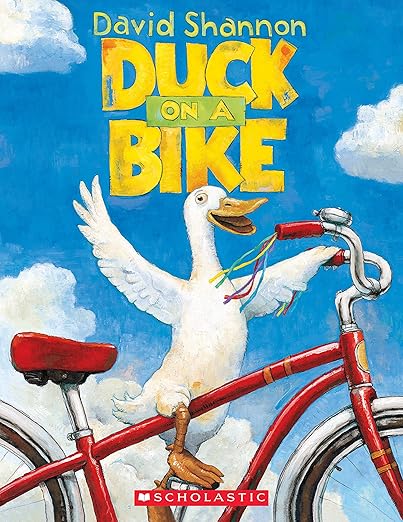
Written and Illustrated by David Shannon
Grade Level
K – 3rd
Time to Read
8-10 min
Core Skills
Vocabulary development, inference skills, high-frequency words, fluency building
Key Vocabulary
pedaled
pushed bike pedals with your feet to make it move
wobbled
moved in an unsteady, shaky way
mighty
very strong or really good at something
skeptical
having doubts about whether something will work
Wish You Could Download This Post As a Beautifully Formatted Lesson Plan?
You Can!!
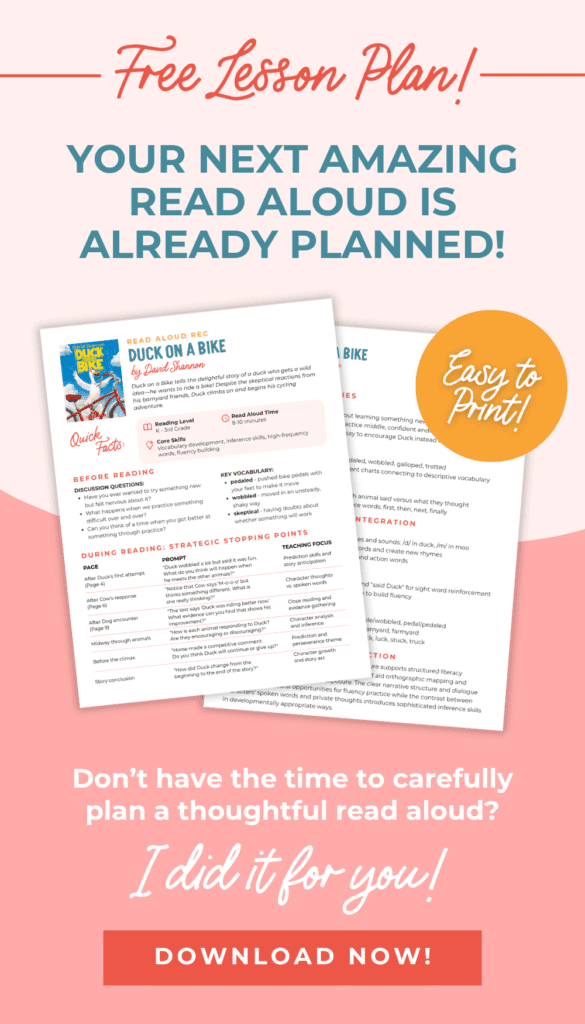
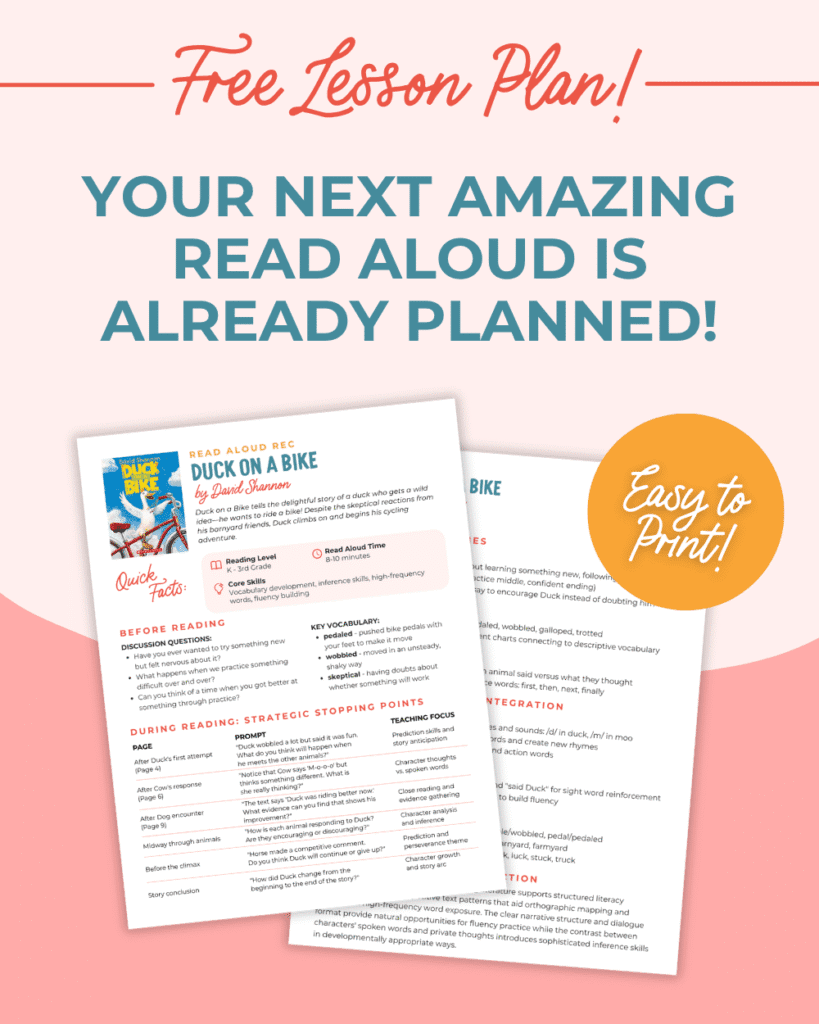
I know that as much as you want to, you don’t always have time to carefully plan a thoughtful read aloud. That’s why I did the hard work for you! Everything you need is in this downloadable Read Aloud Lesson Plan for “Duck On a Bike” All of the vocabulary notes, pre-reading questions, strategic stopping points, and ways to extend the learning beyond the story are ready to go, just for you!
Download the free guide and you’ll have everything you need at your fingertips!